
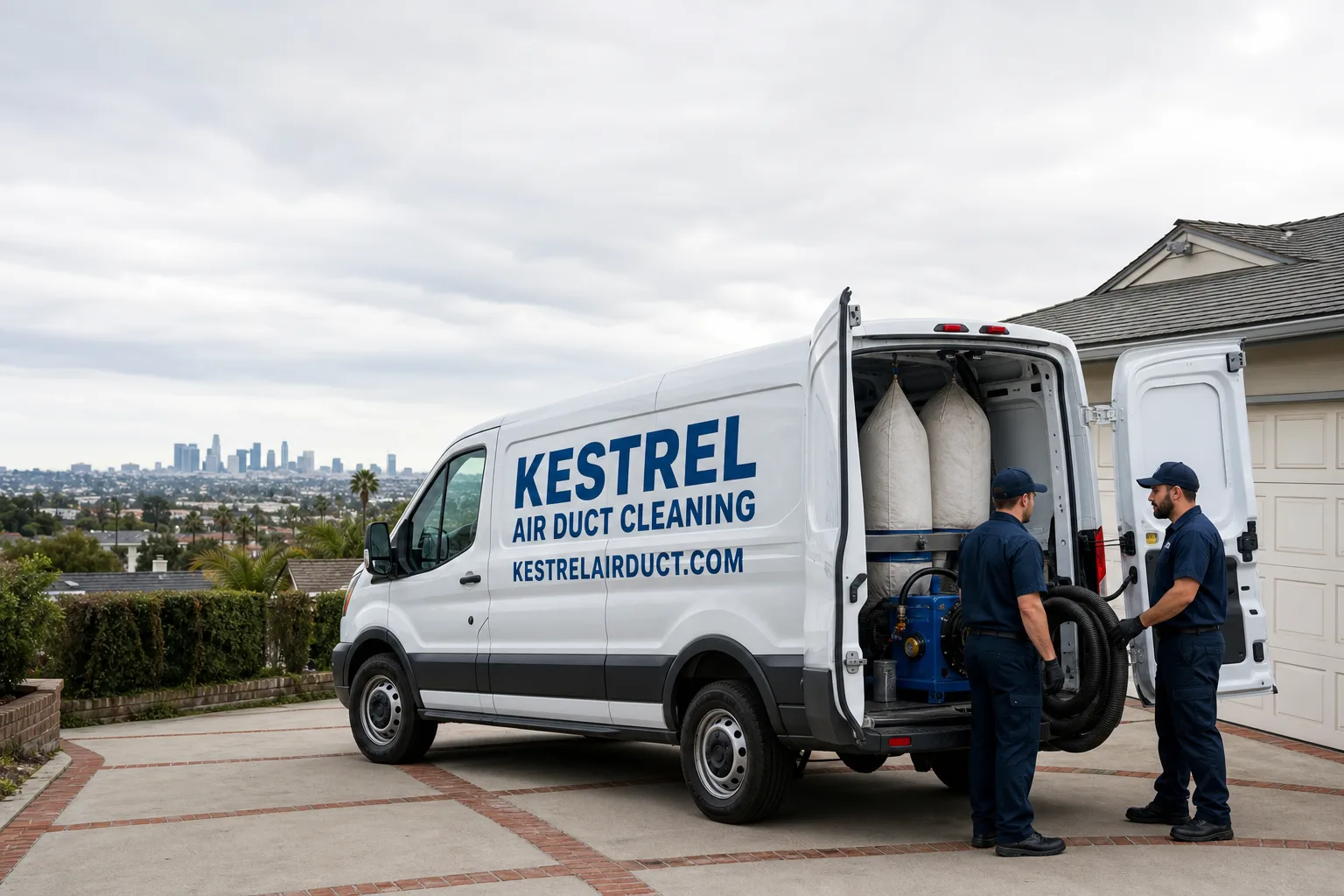
Whole-system duct and dryer vent check with before-and-after photos - you see exactly what came out of your vents
That "$99 whole-house special" is a bait ad - the real number appears once they are in your hallway, or the "clean" is a shop-vac at the register. We photograph the inside of your ducts before and after instead.




 Before
 After
After Before
 After
After Before
 After
AfterLint building up around the outside vent
What’s Happening
Lint collecting around the exterior dryer vent flap is almost always a sign that your dryer vent is partially or fully blocked. When airflow can’t push through the vent freely, exhaust backs up, lint deposits at every pinch point it can find, and the outside opening is usually the most obvious one. This is a dryer vent problem, not a cosmetic one.
The vent runs from the back of your dryer through the wall or ceiling to the outside of the house. Its whole job is to carry hot, moist, lint-laden air out of your home. When something slows that airflow – a bend that’s too sharp, a clog forming deep in the run, a flap that won’t open fully – lint starts to accumulate wherever the air stalls. The exterior vent is the last point before outside air takes over, so that’s where the evidence piles up first. What you’re looking at is your dryer’s exhaust system telling you something is wrong inside where you can’t easily see it.
Why It Happens
1. Lint buildup inside the duct run itself
This is the most common reason by a wide margin. Dryer lint is sticky, and over years of use it coats the inside walls of the duct. As the passage narrows, airflow slows, and lint that would normally blow out the end starts stalling and pushing back toward the exit. You’ll usually also notice your dryer taking longer than one cycle to dry a normal load – that’s the same restriction showing up differently.
2. A stuck or damaged exterior flap
The flap on the outside of your vent is supposed to open when the dryer runs and close when it doesn’t. If it’s warped, corroded, painted shut, or blocked by a screen or debris, it restricts the exit and causes lint to pile up right at the opening. You can check this one yourself from outside: run the dryer and watch whether the flap swings open freely. If it barely moves or doesn’t open at all, that’s your problem.
3. A duct that’s too long or has too many bends
Building codes give dryer duct runs a maximum effective length, and every 90-degree elbow counts against that length. A duct that was installed with too many turns loses the velocity needed to carry lint out before it drops and sticks. If your laundry room is far from an exterior wall, or if the vent snakes through multiple levels, this structural issue compounds over time. You won’t see this from the outside, but your dryer will run hot to the touch and clothes will feel damp at the end of a full cycle.
4. Flexible foil or plastic duct behind the dryer
Older installations often used the accordion-style flexible duct that’s prone to sagging, kinking, and trapping lint in every fold. If yours is the silver foil type and it’s been there for years, there’s a good chance it’s partly collapsed or kinked somewhere behind the appliance. You can usually see the section of duct immediately behind the dryer without moving anything – look for sharp kinks, sagging loops, or any section that’s been taped over and peeling.
What to Do Right Now
- Stop running the dryer until the vent is cleared. A blocked dryer vent is a documented fire risk. Lint is highly flammable, and heat that has nowhere to go builds up inside the drum and duct. One load too many is genuinely not worth it.
- Go outside and look at the vent flap. With the dryer off, check whether the flap opens and closes freely by hand. Clear away any visible lint, debris, bird nesting material, or anything blocking the opening. Do not probe deep into the duct from outside – that just pushes the clog further in.
- Check the lint trap and the trap housing. Pull the trap out and look down into the housing with a flashlight. If you see lint coating the sides of that slot, airflow is already restricted before the exhaust even reaches the duct.
- Photograph what you see. Take a picture of the exterior vent, the lint accumulation, and the flexible duct section behind the dryer if you can see it. These photos help the technician assess the job before arriving and confirm scope so your written estimate is accurate.
- Do not attempt to clean a long or complex duct run yourself. A shop vac from the outside or a brush kit from a hardware store can dislodge a surface clog and push it deeper, or leave most of the buildup untouched while giving a false sense that the job is done. If the run is more than a few feet long, or if you can’t see where the duct goes, call a professional.
How We Fix It
When your local Kestrel Air Duct Cleaning team arrives, the technician starts with a full inspection of the duct run – from the dryer connection point to the exterior termination – before touching a single tool. That inspection is what makes the written price accurate. You get the price before any work begins, every time, with no revisions at the door. That’s the Kingswell Guarantee, not a promotion.
For a blocked dryer vent, the work is dryer vent cleaning. The technician uses professional-grade equipment, including Rotobrush rotary brush systems that scrub debris off the duct walls and Nikro negative-pressure units that pull the loosened material out. Abatement Technologies HEPA filtration keeps that debris from dispersing into your laundry room while the work is being done. Most dryer vent cleaning visits are finished within an hour, though longer or more complex duct runs take more time. The result is a duct that’s clear from the dryer connection to the exterior flap, documented with before-and-after photos so you can see the difference. And if something’s not right within the guarantee period, we come back and make it right at no charge – in writing, on every single job.
Frequently Asked Questions
A blocked dryer vent is a genuine fire hazard and shouldn’t wait. Lint is one of the more flammable household materials there is, and a duct that can’t exhaust properly traps heat alongside that lint. The U.S. Fire Administration has linked thousands of home fires annually to dryer vents – this is a known, documented risk, not a scare tactic. Stop running the dryer and call (469) 972-3151 to get it scheduled.
We don’t post a flat price here because the honest answer depends on the length and configuration of your specific duct run, and quoting a number that doesn’t match your job helps no one. What we can tell you is that you’ll have a written price in hand before any work starts – that’s how every Kestrel visit works. Call (469) 972-3151 and your local team will walk through the job with you and give you an exact number before we schedule.
Your local Kestrel Air Duct Cleaning team handles scheduling directly, so availability depends on where you are and what the day looks like. Calls are answered by a live person any time of day or night – not a voicemail, not an automated system. Call (469) 972-3151 and someone will tell you exactly what the nearest available time is.
Your technician takes before-and-after photos of the duct and exterior vent so you can see the difference yourself – you’re not taking anyone’s word for it. The written guarantee on every job also means that if airflow feels restricted again within the guarantee period, we return and make it right at no charge. That return visit is documented in writing before we leave the first time, not a favor extended after the fact.
Get It Fixed
A blocked dryer vent doesn’t get better on its own. Call (469) 972-3151 and a live person will pick up – any time of day. Your local Kestrel Air Duct Cleaning team will give you a written price before any work starts and back it with the 365-Day Done Right Promise. Book by phone or online.
Written by Dale Whitmore, Owner at Kestrel Air Duct Cleaning, serving communities across the country under the Kingswell Guarantee since 2004.
What Our Customers Say
"My wife's allergies were awful every morning. Had the ducts done and it's made a real difference. Tech was on time and wore booties in the house without me asking."
- Rob Pendergast"Bought an older home and the previous owners had pets everywhere. After Kestrel did the ducts the stale smell was just gone. On time, quick, and they showed me the filter they pulled."
- Preston Ngata"Our dryer was taking two cycles to dry a load. They cleaned the vent and pulled out a frightening amount of lint. Dries in one cycle now and honestly I feel better about the fire risk."
- Marcus Lee