
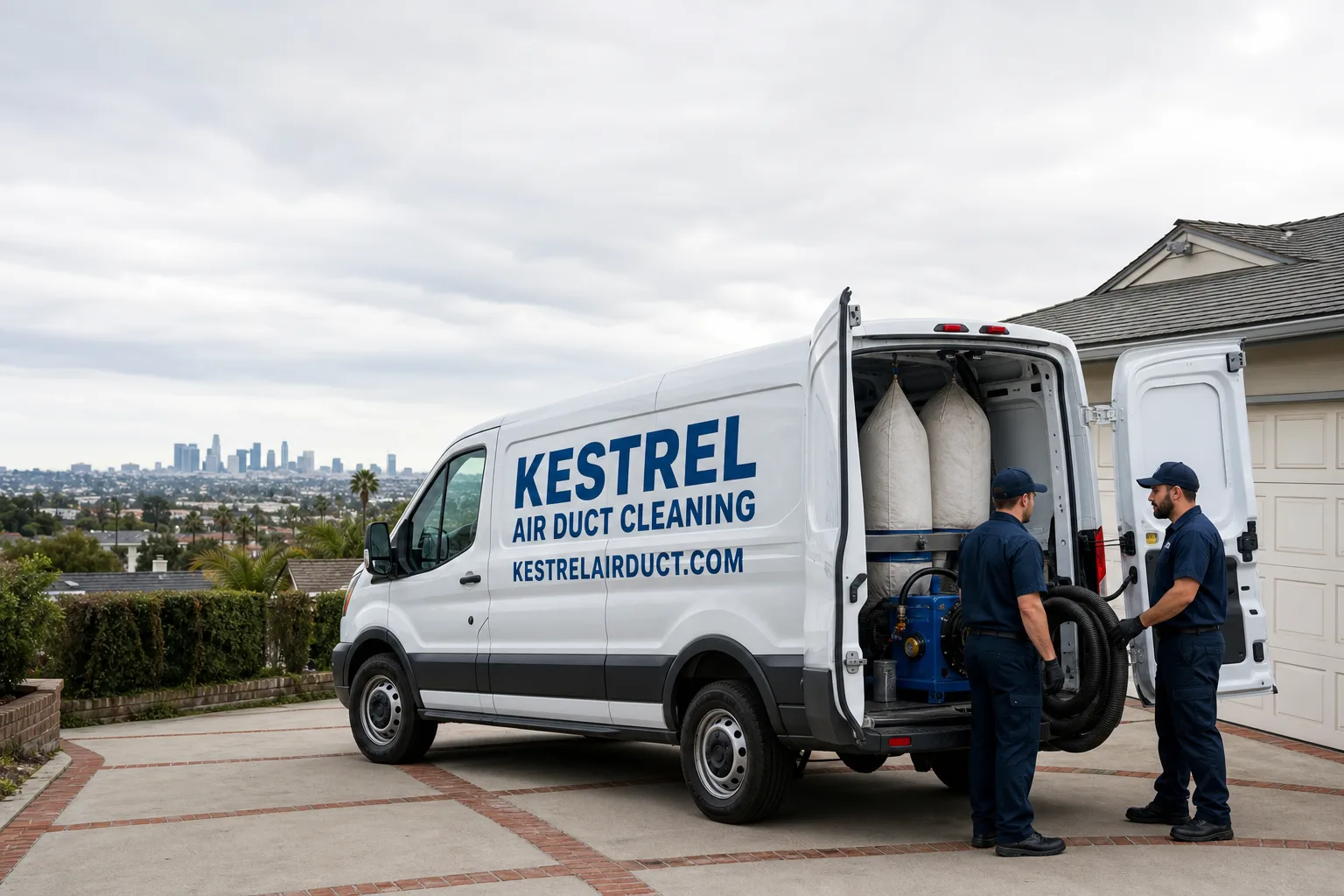
Whole-system duct and dryer vent check with before-and-after photos - you see exactly what came out of your vents
That "$99 whole-house special" is a bait ad - the real number appears once they are in your hallway, or the "clean" is a shop-vac at the register. We photograph the inside of your ducts before and after instead.




 Before
 After
After Before
 After
After Before
 After
AfterFast, Reliable Dryer Vent Cleaning Across Pacific
Dryer vent cleaning in Pacific typically runs $150-$275 for a standard single-family home, and most jobs are completed in under two hours with the work documented on camera. If your dryer’s taking two cycles to finish a load or the laundry room feels unusually humid, that’s not normal wear - it’s a blocked exhaust pathway that needs source removal, not just a shop-vac at the hood.
We’re the Dryer Vent Cleaning team that serves Pacific from our Seattle office, with crews running the valley daily to homes off Milwaukee Boulevard, along the White River, and out toward the rural properties past city limits. We know the difference between a dry plateau vent in Auburn and the damp, condensation-prone runs that sit in Pacific crawl spaces and manufactured-home underbellies. That local knowledge changes how we clean, what tools we bring, and what we expect to find.
Call (469) 972-3151 for a free estimate. We’ll give you a written price before any work starts, and that price includes the full cleaning, camera verification, and our 365-Day Done Right Promise in writing.
Why Kestrel Air Duct Cleaning Is Pacific’s Preferred Dryer Vent Cleaning Company
Pacific homeowners call us because we’ve been on the valley floor where they live. We’ve pulled bird guards clogged with damp, felted lint from terminations on 1980s ranches near the old townsite. We’ve rerouted flex runs in manufactured homes off Stewart Road that were sagging into standing groundwater. We don’t treat Pacific like every other zip code in the metro.
Our technicians are background-checked, uniformed, and equipped with Rotobrush rotary whip systems, Nikro negative-pressure extractors, and Abatement Technologies HEPA filtration - the same professional-grade tools we’d use on a commercial job, not box-store equipment. The Kingswell Way governs every visit: say the price, show up in the window we gave, leave the place cleaner, put the guarantee in writing, come back if it fails.
That guarantee means something here. Pacific’s damp microclimate means a cleaning that looks complete can hide moisture-compacted lint in low elbows. Our 365-Day Done Right Promise covers exactly that scenario - if airflow drops or moisture returns because we missed something in the run, we come back and make it right at no charge. No courtesy call, no discretion. It’s in writing on every invoice.
Calls are answered by a live person, 24/7. Not a queue, not a callback tomorrow. A real conversation about what’s happening with your dryer, whether it’s midnight or Sunday morning.
Dryer Vent Installation in Pacific
Dryer Vent Installation in Pacific means accounting for the Green River Valley’s persistent damp and the older housing stock that dominates this market. Most Pacific homes built between the 1950s and 1980s have dryer exhaust runs that were never designed for modern appliance airflow rates, and many manufactured homes use flex duct routed through underbellies where groundwater and condensation destroy the material from the inside out.
A proper installation here uses rigid or semi-rigid metal ducting sloped to drain, sealed joints that won’t wick crawl-space moisture, and a termination hood with a working flapper that won’t freeze shut or get buried in vegetation. We size the run to your dryer’s rated CFM and back-pressure specs, not guesswork.
When Pacific Homes Need New Vent Runs
We install new dryer vent pathways when the existing run is damaged by moisture, crushed by settling, or simply too long and convoluted for the dryer to push air effectively. In Pacific’s manufactured-home parks and rural properties with outbuildings, we often find original flex duct that’s been patched with tape multiple times, creating turbulence points where lint collects. A clean-sheet installation eliminates those failure points.
Code-Compliant Materials for Moisture-Prone Spaces
Pacific’s crawl spaces and underbellies punish inferior materials. We use galvanized steel or aluminum rigid duct with mechanical fasteners and high-temperature sealant, never foil flex or plastic transition hose, for any run in an unconditioned space. The termination gets a Guardsman bird guard where wildlife is active, or a louvered hood with sufficient free area to prevent back-pressure. Cost for a typical Pacific installation runs $350-$650 depending on run length and access.
Dryer Vent Repair in Pacific
Dryer Vent Repair in Pacific addresses the specific damage this valley climate inflicts on exhaust systems. Sagging flex duct in crawl spaces pools condensate and lint into heavy clogs. Termination hoods on manufactured homes get their flappers stuck closed by ice, weed growth, or mud splatter from unpaved driveways. Joint separations in older rigid duct spill moist, lint-laden air into wall cavities and subfloor spaces where it feeds mold.
We don’t default to replacement. If a run is structurally sound but has localized damage - a crushed elbow, a separated joint, a stuck flapper - we repair with matching materials and test the full system for airflow and back-pressure before we leave.
Crawl-Space Run Recovery
Pacific’s nightly temperature inversions mean crawl-space ductwork stays cold even when daytime temperatures rise. That cold surface condenses moisture from the humid exhaust stream, and the combination wets lint into a dense mat that standard suction can’t move. We open the run at strategic points, use brush agitation to break the mat loose, extract with negative pressure, then re-seal and support the duct so it drains properly. Camera verification confirms the repair.
Manufactured-Home Skirting and Hood Repairs
Low termination points through manufactured-home skirting are vulnerable in Pacific. Winter groundwater, spring weed growth, and summer dust from rural roads all conspire to block or damage the hood. We replace stuck or missing flappers, raise terminations where practical, and install rodent-resistant screening that won’t clog with lint. Typical repairs run $125-$275; we’ll tell you before we start whether repair or full replacement makes more sense.
Trusted Brands We Service in Pacific
We clean, repair, and install exhaust systems for all major dryer manufacturers - Whirlpool, LG, Samsung, Maytag, GE, Bosch, and Speed Queen units are common in Pacific homes. For replacement components and upgrades, we stock Guardsman bird guards and termination hardware, and we can source Honeywell and Aprilaire ventilation accessories for homeowners who want to maintain proper airflow between service visits. Parts availability means most Pacific repairs don’t wait for a second trip. Our Seattle office keeps common hoods, transition fittings, and flex-to-rigid adapters in stock, so when we’re on your property, we finish the job.
Common Dryer Vent Cleaning Problems We See in Pacific Homes
- Damp lint matting in crawl-space runs. Pacific’s valley-floor humidity condenses inside cold flex duct overnight, turning loose lint into wet felt that clings to duct walls. A shop-vac at the termination can’t touch it - rotary brush agitation and negative-air extraction are required to break it loose and pull it out.
- Manufactured-home terminations buried in vegetation and groundwater. Low exhaust points through skirting get overgrown with weeds in summer and sit in standing water through winter. The flapper rusts shut or gets pinned by debris, and the homeowner never notices because the lint trap still looks normal.
- Long rural driveways leading to skipped maintenance. Properties past the city limits on dusty unpaved roads see heavy pollen and particulate loading, and the inconvenience of scheduling means annual cleanings stretch to three or four years. By the time we arrive, the lint pathway is compacted enough to trip the dryer’s thermal cutout repeatedly.
- Post-2009 flood-plain moisture damage in older homes. After the Howard Hanson Dam seepage emergency, many Pacific crawl spaces saw water intrusion that homeowners addressed in the living space but never traced into their dryer exhaust runs. We still find mold-colonized flex duct from that event, hidden where owners don’t look.
Pricing for Dryer Vent Cleaning in Pacific, WA
Most dryer vent cleanings in Pacific run $150-$275 for a standard single-family or manufactured home with a single exhaust run. Here’s how that breaks down:
- Basic cleaning with camera inspection: $150-$195
- Heavy blockage removal requiring extended agitation: $195-$250
- Long runs (30+ feet), multiple bends, or crawl-space access: $225-$275
- Dryer Vent Repair (localized fix): $125-$275
- Dryer Vent Installation (new run): $350-$650
- Bird guard or cap replacement: $45-$125 installed
What moves you up or down in those ranges: run length, number of elbows, whether the duct is accessible from the crawl space or requires subfloor entry, and how compacted the blockage has become. We don’t quote per-vent or teaser rates that change when we arrive. The written price in your hands before we touch a tool is the price you pay. Estimates are free, and we’ll walk you through what we found on camera so you see exactly what the work involves.
We Also Serve Cities Near Pacific
Our crews run the full Green River Valley corridor. If you’re in Pacific, Auburn, Milton, Federal Way, or Puyallup, the same Kingswell Guarantee applies: written price, defined arrival window, clean job site, and a written 365-Day Done Right Promise with free return if the work fails. Scheduling is coordinated from our Seattle office, with local crews dispatched to your area.
Serving Pacific, WA - Our Local Coverage Area
We’re based in the Pacific area and know this community well. Use the map below to see our service coverage - if you’re nearby, we can almost certainly help.
FAQs About Dryer Vent Cleaning in Pacific
Pacific homeowners should clean every 12-18 months, while drier plateau homes in Auburn or Federal Way can often stretch to 24 months. The valley-floor humidity here condenses lint into compacted clumps that restrict airflow faster than the loose, dry accumulation you’d find on higher ground. Rural properties with longer drives and more dust exposure may need annual service. Call (469) 972-3151 and we’ll assess your specific run and usage.
Yes, and we do it regularly in Pacific’s manufactured-home communities. The underbelly flex runs are among the most moisture-compromised systems we see. We access the run from both the dryer connection and the termination hood, use rotary brush agitation to break loose damp-compacted lint, and extract with negative pressure so nothing spills into your living space. Camera verification confirms the full pathway is clear.
It really affects the vent. Pacific’s nightly inversions produce sustained high humidity in crawl spaces and underbellies where exhaust runs sit cold. That moisture condenses on duct walls and wets lint into dense felt that standard suction can’t move. We’ve camera-inspected Pacific vents that were 70% blocked with wet matting while the interior lint trap looked completely normal. The climate here creates a different cleaning challenge than drier locations nearby.
No. Blowing air through a damp, compacted Pacific vent just packs the blockage tighter. Our process uses a Rotobrush rotary whip to physically agitate lint off duct walls, a Nikro negative-pressure extractor to pull loosened debris out of the system, and Abatement Technologies HEPA filtration to capture particles so they don’t recirculate in your home. We camera-inspect before and after so you see the difference. The entire process is documented, and we measure airflow and back-pressure to confirm your dryer is operating within manufacturer specs.
Clean the trap again, then run the dryer on air fluff and feel the exhaust airflow at the outside hood. Weak or warm-moist air instead of strong, hot flow means blockage in the run - not the trap. In Pacific, we commonly find the restriction is damp, felted lint in a low elbow or a stuck flapper at the termination, both invisible from inside. Don’t run the dryer repeatedly; the thermal cutout is a safety device, not a convenience feature, and overriding it risks fire. Call (469) 972-3151 for a free estimate and we’ll camera-locate the exact problem.
Written by Dale Whitmore, Owner at Kestrel Air Duct Cleaning, serving Pacific and the Green River Valley under the Kingswell Guarantee since 2004.