
Rotobrush Air Duct Cleaning in Los Angeles: A Homeowner’s Guide
Rotobrush air duct cleaning in Los Angeles typically costs between $450 and $900 for a whole-home system, depending on home size, number of returns, and how long it’s been since the last cleaning. The name refers to a specific brand of rotary brush machine that scrubs the duct walls while a built-in vacuum pulls debris out at the contact point. It’s good equipment in the right hands, but in Los Angeles, plenty of contractors toss the word around without ever running the full system protocol, and that’s a problem worth understanding before you book anyone.
If you’d rather skip the research and just get a straight answer about your home, call us at (469) 972-3151. We’ll give you a written price before any work starts.
What “Rotobrush” Actually Means (And Why Contractors Say It)
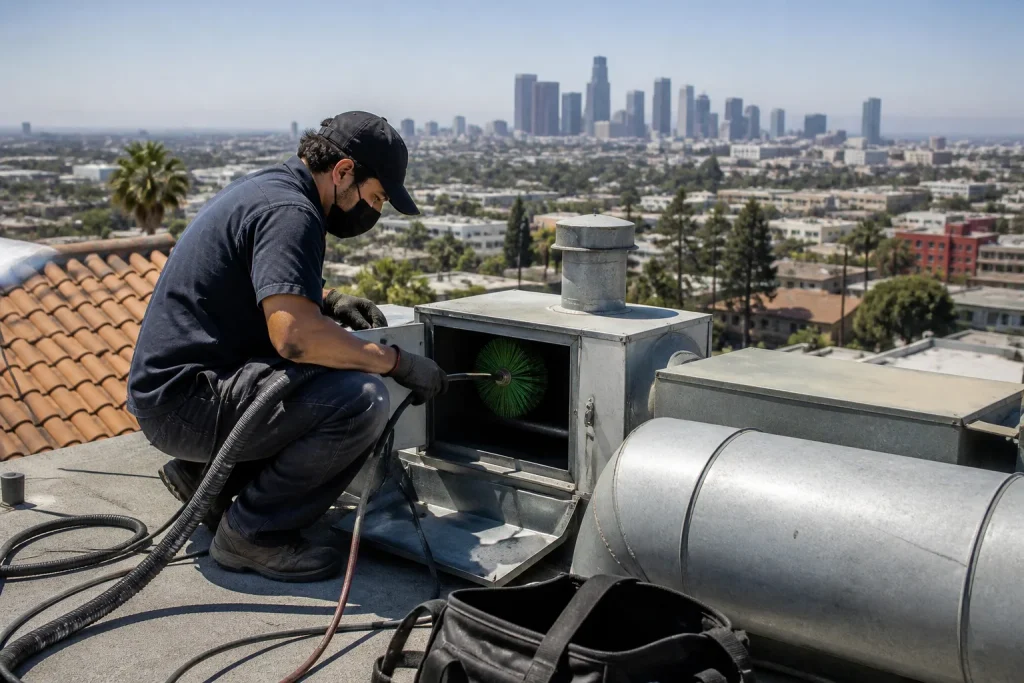
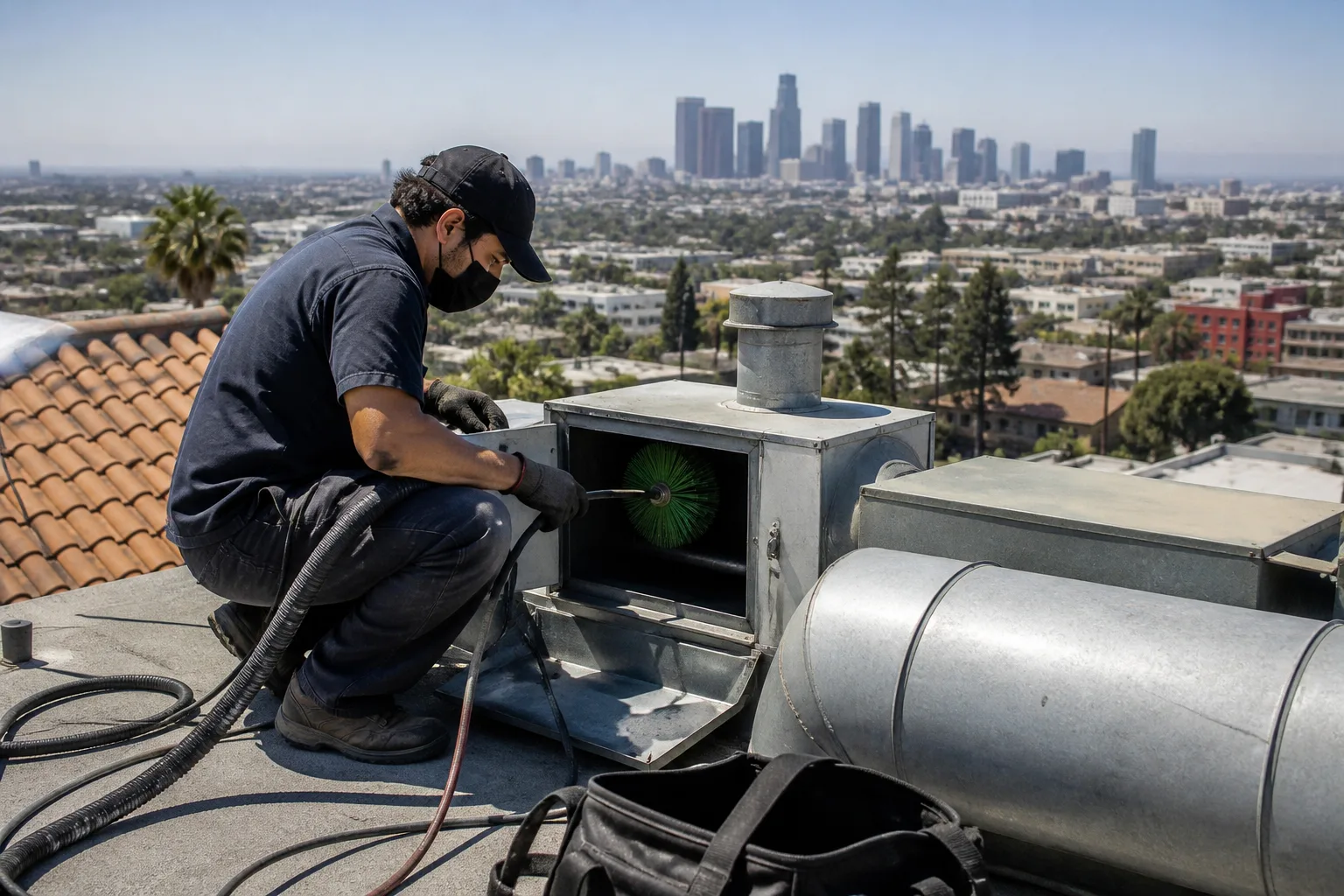
Here’s the thing most Los Angeles homeowners don’t know: Rotobrush is a brand, not a method. It’s like saying “Kleenex” when you mean tissue. The company Rotobrush International makes a specific piece of equipment: a continuous-contact rotary brush system. The brush head spins on a flexible drive cable, scrubbing the duct walls as it travels through the run. At the same time, a vacuum integrated into the brush assembly extracts debris right at the point of contact.
That last part matters. A brush that just spins and knocks dust loose without simultaneous extraction sends debris down the line, where it either settles in a low spot or gets blown into your living room when the system kicks back on. The real Rotobrush protocol captures debris where it’s dislodged. That’s the difference between cleaning your ducts and just relocating the dirt.
In our experience, a lot of Los Angeles contractors use “Rotobrush” the way used car lots use “fully inspected.” It sounds thorough. It implies a standard. But unless the technician runs the full agitation-and-extraction sequence, checks every branch line, and shows you the before-and-after camera footage, the word doesn’t mean much. Ask any company that claims Rotobrush cleaning to explain exactly what the machine does inside your ducts. If they fumble, you’ve learned something.
How the Rotobrush System Works Inside Your Ducts
Let’s walk through what should happen when a Rotobrush system is used correctly in a Los Angeles home. Understanding the process helps you spot contractors who cut corners.
The technician starts by connecting a negative-air collection unit to the main trunk line. This creates continuous suction through the entire duct system. Then the rotary brush enters each register and travels down the branch lines, spinning at high speed against the duct walls. The brush agitates the boundary layer of dust, pet hair, and debris that sticks to metal and flex duct. Because the vacuum is pulling at the same time, the loosened material gets drawn out immediately, not pushed deeper.
On a typical Los Angeles home with eight to twelve registers, this process takes two to four hours when done properly. The technician should clean every supply run, the returns, the trunk lines, and the plenum. Before and after, they should run a camera through the ducts so you can see the difference. Not photos from a stock library. Your ducts, your camera footage, viewed in real time on their monitor.
We run Rotobrush equipment alongside Kestrel Air Duct Cleaning home protocol: negative-pressure containment throughout the job, HEPA filtration on the collection unit from Abatement Technologies, and a final walkthrough where you see the before-and-after images yourself. If a crew won’t show you the camera feed, that’s a red flag, not a courtesy.
Where Rotobrush Excels in Los Angeles Homes (And Where It Doesn’t)
Los Angeles has a lot of older housing stock. Craftsman bungalows in Highland Park, mid-century ranches in the Valley, Spanish-style homes in West Adams. Many of these houses have narrow, irregular duct runs that were installed decades ago and modified piecemeal by different contractors over the years. That’s exactly where a flexible rotary brush system shines.
Rigid brush systems and trunk-line-only skids work fine on large, straight commercial ductwork. But residential branch lines in older Los Angeles homes twist, transition sizes, and dead-end in awkward spots. The flexible drive cable on a Rotobrush follows those turns and scrubs the full diameter of the duct. It reaches the spots a fixed rod can’t.
However, Rotobrush isn’t the right tool for everything. On very large trunk lines or heavily contaminated systems where the duct interior is caked with construction debris or longstanding neglect, a negative-air skid with aggressive agitation often does a better job on the main runs. A skilled technician knows when to use which approach. The point isn’t the brand name on the machine. It’s whether the right tool gets used for your specific duct layout.
For homeowners deciding between a general contractor’s “duct cleaning add-on” and a dedicated air duct company, the equipment conversation is a good litmus test. Ask what they’d use on a 6-inch flex branch versus a 14-inch metal trunk. If the answer doesn’t instantly involve different tools, they’re probably not the crew for the job.
What Rotobrush Cannot Do (Three Things to Know)
Air duct cleaning in Los Angeles gets oversold. You’ll hear claims that cleaning will sanitize your system, seal your ducts, and solve every indoor air problem you’ve ever had. Most of that is marketing, not reality. Here’s what a rotary brush system does not do:
- It does not sanitize. A brush removes physical debris: dust, hair, dander, the occasional dust-caked dryer sheet that shouldn’t be in there. It does not disinfect. If a contractor promises “sanitizing” with the cleaning, ask what product they’re applying and what it’s EPA-registered for. Most of the time, plain debris removal is what you need, and it’s what you’re paying for.
- It does not seal gaps. Duct leakage in Los Angeles homes is common, especially in older systems where tape has dried out and joints have separated. A brush passes through and cleans the surface. It doesn’t repair seams. If leakage is a concern, you need a duct-pressure test and sealing work, which is a different job.
- It does not replace a blower-door pressure test. Cleaning removes the stuff inside the ducts. A pressure test measures how much conditioned air escapes through leaks. One improves cleanliness. The other affects efficiency and comfort. They answer different questions.
We’ve pulled some wild things out of ducts over the years. Construction debris from a remodel in Echo Park. Twenty years of pet hair in a Silver Lake bungalow. Once, a child’s toy car wedged in a return line in Pasadena. The brush got the car out. It did not make the system leak-free. Those are separate conversations, and anyone who tells you otherwise is selling you something extra.
If you want to know whether your ducts need cleaning or something more, we’ll tell you straight. Call (469) 972-3151 and we’ll ask about your home, your system, and what you’re seeing before we ever send a technician out.
What a Legitimate Before-and-After Inspection Should Show
Every decent Air Duct Cleaning in Los Angeles job includes camera documentation. But camera documentation isn’t all created equal. Here’s what you should expect to see, and what should make you suspicious.
Before cleaning, the camera should show the duct interior in enough detail that you can identify the type of buildup. Dust film that’s darker than the metal underneath. Clumps of hair and dander collecting at turns or register boots. Maybe a visible film of cooking grease if the kitchen exhaust has been backdrafting. The point is that you should know what you’re looking at before anyone starts the machine.
After cleaning, the same camera should run the same path. The metal should look like metal: matte, not glossy, but clearly free of the film that was there before. Flex duct should show its interior ridges without caked debris between them. The contrast should be obvious, not a subtle difference that requires the technician to explain why it’s actually a big improvement.
Watch the monitor in real time if you can. Some homeowners wander off during the job, and then the technician hands them a tablet with “after” photos from a different part of the system. The photos look fine because they were taken in a section that was never that dirty. Real-time viewing removes that trick. If a company won’t let you watch the screen while they run the camera, find another company.
Why Los Angeles Ducts Get Dirty Faster Than You’d Expect
Los Angeles is a dry, dusty place. Between the Santa Ana winds, the freeway particulates, and the general lack of rain nine months of the year, the air carries a steady load of fine material. A lot of it ends up in your home, and once it’s in, the HVAC system recirculates it.
Older Los Angeles homes compound the issue. Many were built before modern filtration standards, and plenty still have the original returns undersized for the square footage. When returns are undersized, the system pulls harder, which draws more air from wherever it can find it. Crawl spaces, attics, wall cavities. That air carries dust, insulation fibers, and whatever else is living in those spaces.
If you run your system heavily in summer, which most of Los Angeles does, the ducts accumulate material faster. The buildup reduces airflow, which reduces efficiency, which costs you money and shortens equipment life. It’s not just an allergy question. It’s a mechanical one. A system with clean ducts moves air more easily, and that’s better for your compressor, your energy bill, and your comfort.
We ran a job in a Woodland Hills home a few years back where the homeowner hadn’t cleaned the ducts in over a decade. The return was so loaded that the blower motor was working against a restricted path. The homeowner thought the system was failing. It wasn’t. It was suffocating. After the cleaning, the system ran quieter and cooled the back bedrooms for the first time in years. The ducts weren’t the only factor in that house, but they were the biggest one.
How to Choose a Duct Cleaning Company in Los Angeles
So you’ve decided to get your ducts cleaned, and you’re comparing companies. Here’s the shortlist of questions that separate the real operators from the van-and-a-vacuum crowd.
- What’s the written price, and what does it include? If the price is per vent, hang up. Per-vent pricing is how a $99 “whole home special” becomes an $800 invoice once the technician counts your registers and starts adding fees. A legitimate company prices the whole system before work starts.
- What equipment do you use, and why? If they can’t name the equipment or explain why they’re using it, they’re renting or borrowing legitimacy. Nikro negative-pressure units, Rotobrush rotary brushes, and Abatement Technologies HEPA filtration are standard on professional trucks. If the technician pulls out a shop vac with a brush taped to the hose, you’re not getting duct cleaning. You’re getting a demonstration.
- Will you show me the before-and-after camera footage in real time? Any company that hesitates on this is hiding something. The camera doesn’t lie, and if they don’t want you watching, there’s a reason.
- What’s the guarantee, and is it in writing? We put our 365-Day Done Right Promise in writing on every job. If the work falls short within the guarantee period, we return and make it right at no charge. That’s not a courtesy. It’s a contract term. If a company won’t put their guarantee in writing, it’s not a guarantee. It’s a sales line.
- Who’s actually coming to my house? Background-checked, uniformed technicians who work for the company you called. Not day laborers picked up from a parking lot. This is a home you’re letting them into, and the answer to this question tells you a lot about how the company operates.
When to call a pro: if your vents are visibly coated, if you have pets and haven’t cleaned in years, if you just bought an older home and don’t know the last time the ducts were touched, or if someone in the house has respiratory issues and the air feels constantly dusty. Duct cleaning isn’t a hard sell and it’s not an emergency. But it’s also not a job you want to leave to the lowest bidder or put off indefinitely.
The Bottom Line
Rotobrush air duct cleaning in Los Angeles is a legitimate, effective process when the equipment is used correctly. The rotary brush scrubs the duct walls, the integrated vacuum pulls debris out at the contact point, and you end up with visibly cleaner ducts. But the brand name alone is not a guarantee of quality. Ask what the machine does, watch the camera, get the price in writing, and make sure the guarantee is more than a phrase on a flyer.
If you’re in Los Angeles and need help, Kestrel Air Duct Cleaning offers free estimates. We’ll give you a written price before any work starts, show you the before-and-after footage in real time, and back the job with our 365-Day Done Right Promise in writing. Call (469) 972-3151. A live person answers, any time of day.
Related services in Los Angeles: Dryer Vent Cleaning in Los Angeles uses the same professional-grade approach to clear lint buildup that causes thousands of house fires every year. If your dryer takes 60 minutes to dry a load, your vent is telling you something.
Frequently Asked Questions
Most Los Angeles homes run between $450 and $900 for whole-system air duct cleaning, depending on square footage, number of registers, and how long it’s been since the last cleaning. At Kestrel, you get the written price before any work starts, so the number you’re quoted is the number you pay. Call (469) 972-3151 for an exact quote on your home.
“Rotobrush” is a brand of rotary brush equipment, not a category of cleaning. When used correctly, it’s effective on the narrow, irregular branch lines common in older Los Angeles homes because the flexible drive cable follows duct turns. But the quality of the job depends more on the technician running the equipment than the name on the machine. A skilled operator with Nikro negative-pressure extraction will outperform a careless one with any brand of brush.
Ask to watch the before-and-after camera inspection in real time. You should see the same duct runs before anyone starts and after the job is finished. The difference should be obvious: metal that looks like metal, flex duct without caked debris in the ridges. If a company won’t show you live camera footage, don’t hire them. Call (469) 972-3151 and we’ll walk you through what you should expect to see.
In the Los Angeles climate, with its dry, dusty air and seasonal Santa Ana winds, most homes benefit from duct cleaning every three to five years. Homes with pets, recent remodeling, or heavy year-round system use may need it more often. If your vents are visibly coated or the house gets dusty within days of cleaning, it’s time. We’ll give you an honest recommendation based on what your camera inspection shows, not a schedule we invented.
Written by Dale Whitmore, Owner at Kestrel Air Duct Cleaning, serving Los Angeles since 2004.
Need Air Duct Cleaning Help?
Call Kestrel Air Duct Cleaning - licensed & insured, here with fast after-hours help in Los Angeles.
(469) 972-3151