
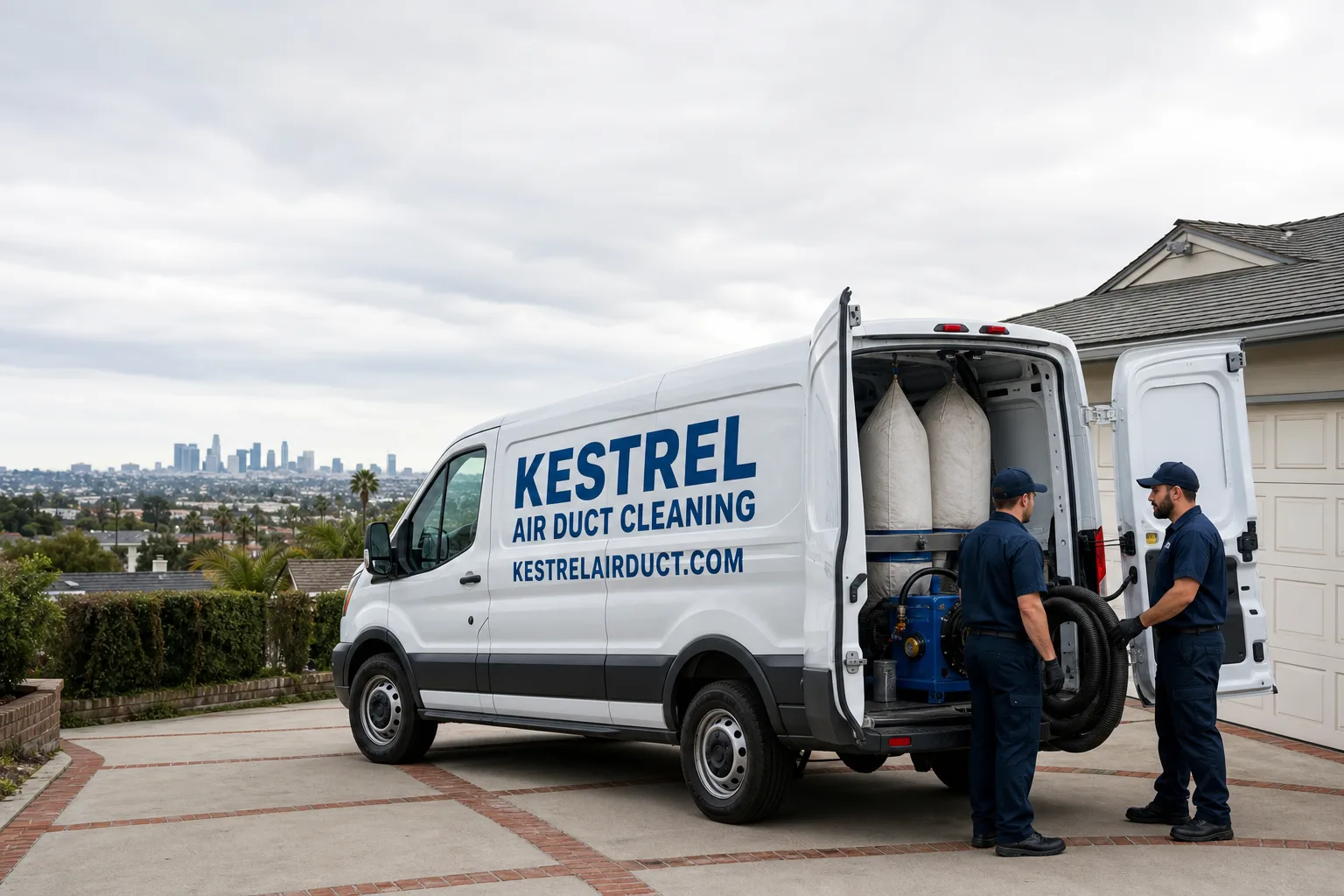
Whole-system duct and dryer vent check with before-and-after photos - you see exactly what came out of your vents
That "$99 whole-house special" is a bait ad - the real number appears once they are in your hallway, or the "clean" is a shop-vac at the register. We photograph the inside of your ducts before and after instead.




 Before
 After
After Before
 After
After Before
 After
AfterClothes Take Two Cycles to Dry
If your dryer is running a full cycle and the clothes are still damp when you pull them out, a blocked dryer vent is the most likely cause. Restricted airflow traps heat and moisture inside the drum instead of exhausting them outside, which forces you to run a second cycle to finish the job. This is one of the most common dryer complaints we hear, and in most cases it has nothing to do with the dryer itself.
The dryer’s job is simple: push hot, moist air out of the drum and out of your home through the exhaust vent. When that path gets narrow, the moisture has nowhere to go. The dryer keeps running, keeps heating, and you keep waiting. Over time, lint compresses inside the duct and builds a wall the airflow can’t get through. The machine isn’t broken. It’s fighting a restriction it can’t overcome on its own.
Why It Happens
Lint Buildup in the Dryer Vent Duct
This is the cause behind the symptom the vast majority of the time. Every load sheds lint, and the lint trap only catches a portion of it. The rest travels into the exhaust duct, where it sticks to the walls and slowly builds up over months and years. When the restriction gets severe enough, moist air can’t escape fast enough to dry a full load in one cycle. A sign this is your problem: the outside of the dryer cabinet feels unusually hot to the touch, and if you hold your hand near the exterior vent cap, you’ll notice weak airflow or none at all.
A Kinked or Crushed Flexible Duct Section
A lot of dryers are connected to the wall with a short run of flexible foil or plastic duct. If the dryer got pushed back against the wall when someone moved it, that flexible section can kink sharply and cut airflow almost completely, even if the rest of the duct is clean. Pull the dryer out a few inches and look at the duct behind it. If it’s bent at a hard angle, flattened, or pinched, that’s your problem right there. This is a straightforward fix, but be careful when pulling the dryer, and don’t yank any gas line or electrical cord.
A Blocked or Stuck Exterior Vent Cap
The vent exits your home through a cap on an exterior wall or the roof. That cap has a flap or a set of louvers that open when air flows through and close when the dryer isn’t running. Over time those flaps get coated in lint, stuck shut with paint or ice, or blocked by a bird nest. If the cap won’t open fully, exhaust air backs up. Go outside while the dryer is running and look at the vent cap. If the flap isn’t opening, or you see lint matted around the opening, that’s a strong indicator the vent path is compromised.
Duct Length or Configuration Beyond What the Dryer Can Handle
Every dryer has a maximum allowable duct run, measured in equivalent feet, that accounts for straight runs and bends. Homes where the dryer is far from an exterior wall, or where the duct takes several turns to get there, can end up with a run that’s simply too long for the dryer’s blower to push air through effectively. This is less obvious to spot, but if your duct situation has never been assessed and the two-cycle problem started shortly after you moved in or had the laundry room reconfigured, it’s worth having a technician take a look at the whole path.
What to Do Right Now
- Stop running the dryer until the vent is checked. A blocked dryer vent is a genuine fire hazard. Lint is combustible, and trapped heat inside a restricted duct creates the exact conditions where fires start. Don’t run another cycle until you know what’s going on.
- Check the exterior vent cap. Go outside while the dryer is off and look at where the exhaust exits the building. Note whether it’s on a wall or the roof. If it’s on the roof, don’t climb up to check it, call a professional. If it’s on the wall and accessible, see if the flap moves freely and if there’s visible lint at the opening.
- Look behind the dryer at the flexible connection. Pull the dryer out carefully, a few inches is enough. Look for kinks, tears, or a section that’s been crushed flat. Don’t pull hard enough to stress any gas line or electrical connection. If you’re not sure which type of hookup you have, stop and call.
- Clean the lint trap, then look past it. Remove the lint screen and clean it fully. Then shine a flashlight down into the trap housing. If you see a mat of lint down in the housing itself, beyond where the screen sits, that’s debris that’s built up inside the machine’s internal ducting, and it confirms the system needs a professional cleaning.
- Photograph what you find. If you see a blocked cap, a kinked duct, or anything that looks wrong, take a photo before you call. It helps the technician understand the setup before they arrive and gets the job done faster.
How We Fix It
When your local Kestrel Air Duct Cleaning team arrives, the first thing a technician does is walk the full vent path, from the dryer cabinet to the exterior termination point. Before any equipment comes out, you get a written price. That’s the Kingswell Way: say the price before the work starts, every single time, no revisions at the door.
The actual cleaning is dryer vent cleaning, and it’s done with professional-grade equipment: Rotobrush rotary brush systems that physically dislodge built-up lint from the duct walls, and Nikro negative-pressure units that pull it out so it doesn’t just redistribute inside your home. If the exterior cap is blocked or damaged, the technician addresses that as part of the visit.
Most dryer vent cleaning jobs are finished within an hour. Before leaving, the technician will confirm airflow at the exterior termination so you can see the difference yourself. The work is backed by our 365-Day Done Right Promise: if something falls short inside that period, we come back and make it right at no charge, and that’s in writing before we leave.
Frequently Asked Questions
A blocked dryer vent is a real fire hazard, not just an inconvenience. Lint is highly flammable, and when hot exhaust air can’t escape, temperatures inside the duct and around the dryer motor climb to the point where ignition becomes a genuine risk. Stop running the dryer until the vent is inspected. Call (469) 972-3151 and we’ll get someone out to you.
We wouldn’t. A partial blockage that’s already causing two-cycle drying is a blockage that’s close to becoming a full one, and the fire risk goes up as restriction increases. Letting it sit also means your dryer’s motor and heating element are working harder than they should, which shortens their life. Call (469) 972-3151 and get it on the schedule before you run another load.
It’s possible but much less common. A failed heating element, a worn moisture sensor, or a blower issue inside the machine can all cause slow drying. That said, a blocked vent is the leading cause, and it’s the right place to start because it’s also the dangerous one. If the vent cleans up completely and the problem continues, that points back to the appliance and a different service call.
Your local Kestrel technician will confirm airflow at the exterior vent cap before leaving, so you can see that air is moving freely. We also take before-and-after photos of the duct and the debris removed, so you have a clear record of what was there and what the system looks like now. That transparency is part of the job, not an add-on.
Get It Fixed
Call (469) 972-3151 and a real person will pick up. Your local Kestrel Air Duct Cleaning team will walk the full vent path, give you a written price before touching anything, and back the work with the 365-Day Done Right Promise. Don’t run another load until you do.
Written by Dale Whitmore, Owner at Kestrel Air Duct Cleaning, serving homeowners across the country under the Kingswell Guarantee since 2004.
What Our Customers Say
"Set up an appointment for the whole house plus the dryer line. They called the morning of to confirm, showed up in the window, and showed me pictures of the gunk they pulled out. Worth it."
- Terrence Boyd"My wife's allergies were awful every morning. Had the ducts done and it's made a real difference. Tech was on time and wore booties in the house without me asking."
- Rob Pendergast"Bought an older home and the previous owners had pets everywhere. After Kestrel did the ducts the stale smell was just gone. On time, quick, and they showed me the filter they pulled."
- Preston Ngata